
Emergency Roof Tarping in Massachusetts is the fastest way to stop water from coming through a storm-damaged roof while a permanent fix is planned. A nor’easter can strip shingles off a Lexington Colonial. A falling oak limb can punch through the roof of a Newton Victorian, or heavy wet snow can split a seam on a Somerville triple-decker. In each case, every hour without cover lets more water into insulation, ceilings, and wall cavities. A properly installed tarp closes the opening, protects the interior, and gives you time for a careful inspection and the right repair.
RB Farina Roofing Co installs heavy-duty reinforced tarps that wrap over the ridge and are secured with wood battens, so they hold through the gusty wind that follows most Massachusetts storms. We also tell you plainly when tarping isn’t safe or won’t work, and what we do instead. Tarping is one part of our broader emergency roof repair in Massachusetts service. We always treat it as a bridge to a permanent repair, never as the repair itself.
Emergency roof tarping means covering a damaged section of roof with a waterproof sheet that sheds water downslope and resists wind uplift until permanent work can be done. Done correctly, the tarp extends well past the damaged area, wraps over the ridge so water can’t run underneath it, and is held by fastened wood battens rather than loose weights. Done poorly, it becomes a sail that tears loose in the next gust and leaves the opening exposed again.
Speed matters more in Massachusetts than in milder climates because the weather rarely gives a damaged roof a break. A storm is often followed by days of rain, a second system off the coast, or a hard freeze. Water that soaks into roof decking and attic insulation can freeze overnight, expand, and spread the damage. Wet insulation loses its value and can hold moisture against framing long enough for mold to start. Covering the opening quickly after wind and storm damage is usually the single most effective step in limiting what the final repair will cost.
A tarp also has clear limits. Sunlight breaks down the plastic, constant wind fatigues the edges, and snow load pushes on the fasteners. It keeps water out for a period of time, but it does not restore the roof’s structure, underlayment, or shingles. Its job is to protect the home and show your insurer that reasonable steps were taken while the permanent repair is scheduled.

Nor’easters and strong summer thunderstorms often peel shingles off in strips, especially along rakes, ridges, and the windward slope. Once shingles are gone, the underlayment beneath is the only barrier left. That layer was never meant to face rain and sun directly, and it tears or lifts quickly. Shingles that are creased or lifted but still attached can also let wind-driven rain in sideways. On older asphalt roofs across Medford, Malden, and Quincy, a single storm can loosen far more shingles than you can see from the yard. A tarp over the affected slope stops the water until the roof can be properly evaluated and repaired.
Mature trees are part of what makes towns like Belmont, Winchester, and Wellesley attractive, and they are also a leading cause of roof punctures. A heavy limb can crack rafters, punch through decking, and leave a jagged hole that lets in large amounts of water. The limb must be safely removed first, often in coordination with a tree service if it is large or still hung up. After that, we cover the opening with a tarp sized well beyond the break. If framing is cracked, we note it so the permanent repair includes structural work, not just new shingles.
Some storms leave more than a few missing shingles. High wind can pull off sections of underlayment, rip flashing away from chimneys and sidewalls, or lift the edge of a low-slope roof on a triple-decker or commercial building. Bare plywood or plank decking will absorb rain like a sponge, and older homes with board sheathing have gaps that let water straight into the attic. Any area where you can see wood, felt, or daylight is a strong candidate for immediate tarping. That is especially true when more rain is in the forecast, which in Massachusetts it usually is.
Heavy, wet snow and repeated freeze-thaw cycles cause their own kind of emergency. Ice dams can force water under shingles at the eaves. Attempts to chip ice away, whether by homeowners or inexperienced crews, often tear shingles and gouge the roofing below. Snow sliding off a steep upper roof can strip shingles from a lower porch roof. In these cases, a tarp is only useful once the damaged area is cleared and the surface can be worked safely. In the meantime, we may control water from the interior and plan the tarp for the first safe window.
Some damage can wait a few days for a scheduled repair. Other damage needs to be covered today. These signs mean water is getting in, or will be with the next rain, and a tarp should go on as soon as conditions allow.
Active dripping or a bulging ceiling. Water coming through light fixtures, running down walls, or pooling above drywall means the roof is open. Move belongings, place buckets, and stay out from under a sagging ceiling.
Daylight or debris in the attic. If you can see sky through the roof boards, find wet insulation, or spot broken wood, the roof has an opening that needs to be covered.
Shingles in the yard or bare patches. From the ground, look for dark rectangles, exposed felt, or bare wood, especially after a nor’easter or a strong thunderstorm.
A limb resting on the roof or torn flashing. Branches on the roof, metal flashing peeled back at a chimney, or a lifted roof edge all need prompt attention. Please don’t climb up to check. Wet, damaged roofs are dangerous, and we can assess them safely.
Step 1: Safety and Conditions Check. Before anyone goes up, we assess wind, ice, pitch, and the structure itself. Active ice, sustained high wind, steep slopes slick with rain, or a weakened roof deck can make tarping more dangerous than the leak. When that happens, we don’t force it. We contain water from inside the attic, protect belongings, stage materials, and come back at the first safe window.
Step 2: Before Photos. We photograph the damage from the ground, the roof, and the attic before covering anything. This creates a clear record for your insurance claim.
Step 3: Clearing and Sizing. We remove loose debris, broken shingle pieces, and small branches, then size the tarp to extend several feet past the damage on every side. Whenever the roof allows, the tarp also runs up and over the ridge.
Step 4: Securing the Tarp. We wrap the upper edge over the ridge and roll the remaining edges around wood battens, then fasten the battens through the tarp into the roof. We keep new fastener holes to a minimum and place them where possible in areas already slated for repair.
Step 5: Interior Check and After Photos. We confirm water has stopped entering the attic, look for wet insulation that should be removed, and photograph the finished tarp for your records and your invoice.
Step 6: Inspection and Permanent Plan. Once the weather settles, a full storm damage assessment tells us whether a targeted repair is enough. Some roofs, especially older ones with widespread damage, are better served by a full roof replacement.
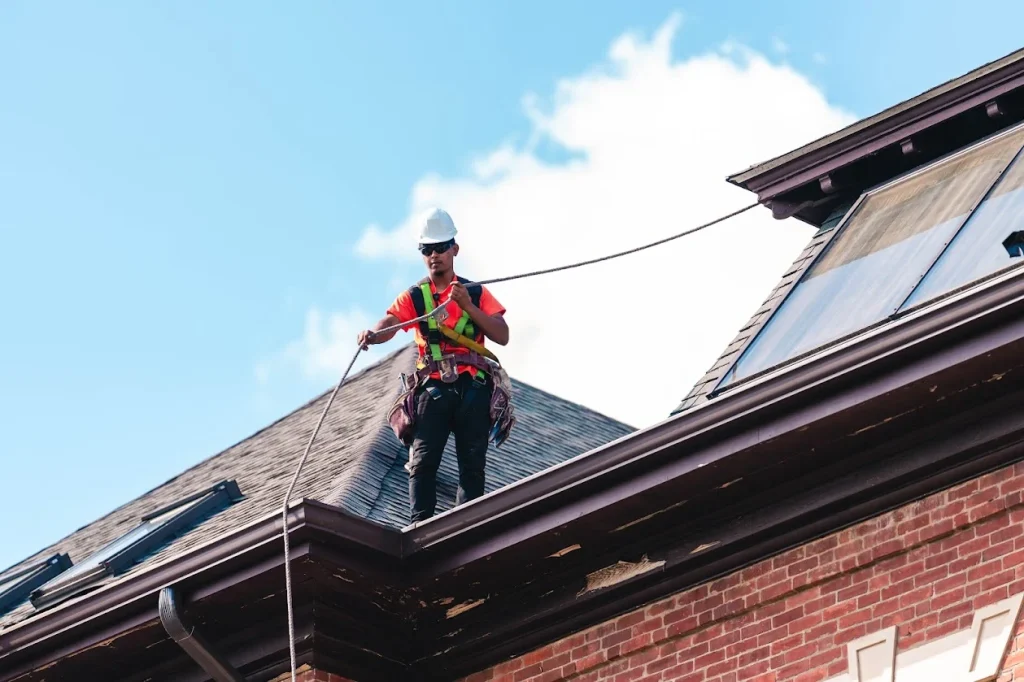
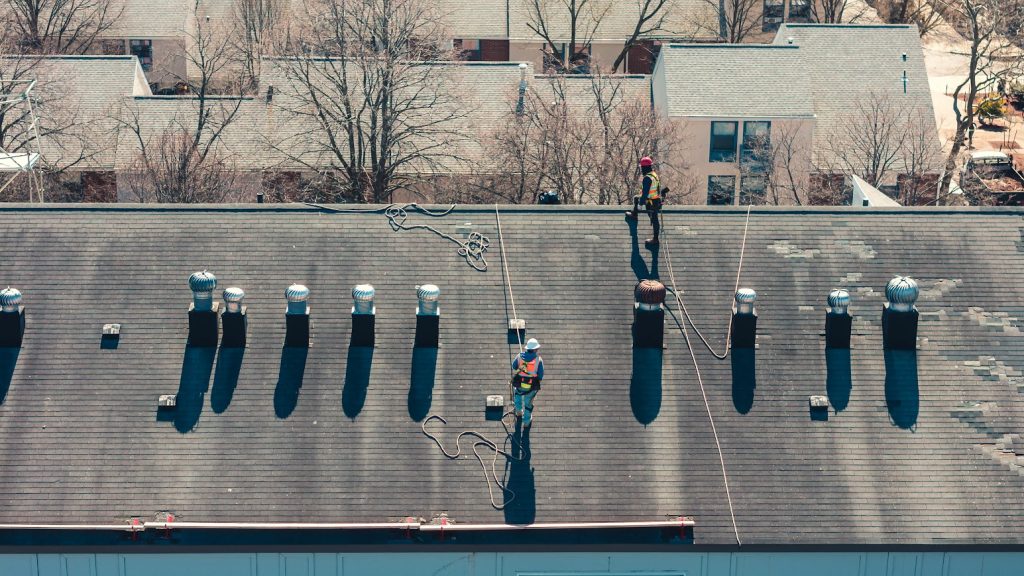
Heavy-Duty Reinforced Polyethylene — We use thick, woven-scrim reinforced tarps with UV inhibitors, noticeably heavier than standard utility tarps. Thin hardware-store tarps tear at the grommets and break down in sunlight within weeks.
Over-the-Ridge Wrapping — Carrying the tarp over the ridge to the opposite slope means water sheds across the top instead of running underneath. On roofs where that isn’t possible, we tuck and seal the upper edge beneath intact shingles.
Batten Fastening — Wood strips rolled into the tarp edge and screwed down spread the holding force along the whole edge. Sandbags shift and slide in nor’easter gusts, and staples alone tear straight through the plastic once wind gets under it.
Winter Tarping — We clear snow from the work area, avoid working on active ice, and fasten through to solid decking. For small openings, a peel-and-stick membrane is sometimes a better temporary seal in the cold.
Transition to Permanent Repair — Every tarp is followed by storm damage roof repair or replacement, scheduled as soon as weather allows.
A well-installed, heavy-duty tarp typically holds for several weeks to a few months. How long depends on sun exposure, wind, and snow load, and a tarp facing full southern sun or exposed coastal wind on the South Shore wears faster than one on a sheltered slope. Check it from the ground after every storm. Look for flapping edges, sagging spots that hold water, battens that have shifted, or new stains on ceilings, and call us right away if anything changes. Please don’t climb onto a tarped roof. The plastic is extremely slippery when wet or frosted, and walking on it can tear it. Avoid raking snow across the tarp yourself. Most important, treat the tarp as a bridge. Schedule the permanent repair promptly, because insurers generally expect timely follow-through, and every extra month under plastic raises the risk of hidden moisture damage.
RB Farina Roofing Co has more than 10 years of experience protecting and repairing roofs across Massachusetts, from Arlington and Cambridge to Lowell and Brockton. We know how storms hit the state’s older housing stock, including Capes, Colonials, Victorians, and multi-family triple-deckers. That experience shows in how we secure a tarp so it actually stays put. We document every step for your insurance claim and give honest advice about when tarping is safe and when it isn’t.
Because we also handle the permanent repair or replacement, the same team that covers your roof follows through on fixing it, backed by our workmanship warranty. You can read reviews from Massachusetts homeowners to see how we’ve handled their emergencies.
Emergency tarping typically runs from about $300 to $1,500. The final cost depends on the size of the damaged area, roof pitch and height, access, debris removal, and whether the call comes at the height of a storm, when emergency demand peaks. Large or multi-slope jobs can cost more. We give you the price before work begins and itemize it on your invoice for insurance.
We prioritize active water entry and work to get crews out quickly, especially after nor’easters and major storms, when calls spike across Massachusetts. Response time depends on conditions and demand. If the roof can’t be safely tarped right away, we help you control water from inside and return at the first safe opportunity. Call (781) 648-5446.
We strongly advise against it. Damaged roofs are often wet, slippery, and structurally weakened, and falls cause serious injuries. DIY tarps held by sandbags or staples also tend to blow off in the next gust, which can complicate an insurance claim. If you’re waiting for us, move belongings and catch water indoors instead.
A properly secured, heavy-duty tarp generally lasts several weeks to a few months, depending on sun, wind, and snow exposure. It is not designed to be a long-term solution. We recommend scheduling the permanent repair as soon as possible, both to prevent hidden moisture damage and because insurers typically expect timely follow-through.
Often, yes. We clear snow from the work area and fasten the tarp through to solid decking. We won’t work on active ice, in sustained high wind, or on a roof that isn’t structurally safe. In those conditions, we contain water from the attic and interior, then install the tarp as soon as it’s safe.
A properly installed tarp adds very few new holes. We wrap it over the ridge and fasten wood battens along the edges, placing fasteners where possible in areas already scheduled for repair. Those holes are sealed or replaced during the permanent work. Poorly secured tarps that flap loose cause far more damage than careful fastening does.
Homeowners policies generally expect you to take reasonable steps to prevent further damage after a covered event, and emergency tarping is often reimbursed as part of the claim. Photograph the damage before and after tarping and keep every invoice. Our insurance roof inspection can support your claim. Coverage always depends on your specific policy.
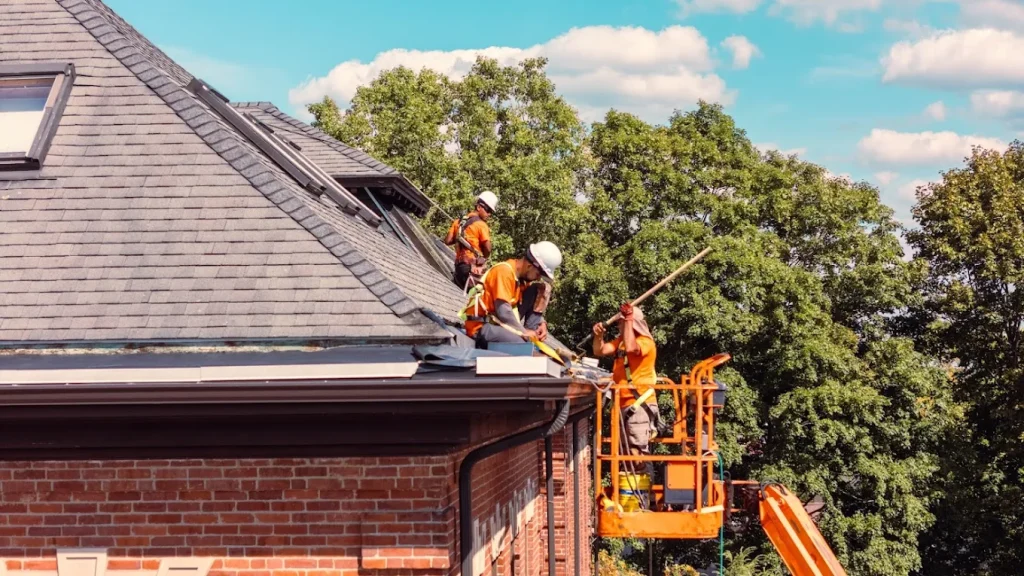
If a storm, fallen limb, or heavy snow has opened up your roof, every hour of rain adds to the damage. RB Farina Roofing Co provides Emergency Roof Tarping in Massachusetts with heavy-duty reinforced tarps, secure batten fastening, and full photo documentation for your insurance claim. Afterward, we provide an honest plan for the permanent repair.
Call us at (781) 648-5446 or contact our team online to request emergency tarping. We work out of 1319 Massachusetts Avenue in Arlington and serve homeowners and property managers across Massachusetts, from Boston and Brookline to Waltham, Watertown, and Lynn.
Provide your name, phone number, and any specific service requirements.
