
Roof Patching in Massachusetts is the targeted repair of one defined damaged area of a roof that still has years of service left. Typical examples are a few torn shingles after a nor’easter, a punctured section of flat-roof membrane, or a soft spot of decking under a failed vent boot. A proper patch removes the damaged material completely and repairs whatever sits beneath it. It then ties new material into the surrounding roof so the area sheds water and holds through winter the same way the original roof does.
RB Farina Roofing Co patches asphalt shingle, flat, and low-slope roofs on homes and commercial buildings from Arlington and Lexington to Quincy and Lowell. Before we patch anything, we confirm that a patch is actually the right fix. On a roof with widespread wear, a patch only postpones a bigger expense. Patching is one part of our full range of roof repair services in Massachusetts. If the damage turns out to be broader than it looked from the ground, we’ll tell you plainly and lay out your options.
Roof patching means replacing or reinforcing material in one bounded area of a roof. That area might be a few square feet where a branch punctured the shingles, a strip along the ridge where wind tore off the caps, or a seam on a rubber roof that has pulled apart. The work stays inside that boundary plus a margin of overlap into sound material, usually the course of shingles above and to each side. That overlap lets the repair weave into the existing roof instead of sitting on top of it.
A patch is different from a broader repair, which addresses a system-level problem. Examples include reflashing an entire chimney, re-decking a whole slope, or correcting ventilation across an attic. Replacement goes further still: it strips the roof to the deck and starts over. A patch is the smallest correct repair. It fixes the damage you have without paying to rework sections of roof that don’t need it.
The key word is correct. A dab of roofing cement over a cracked shingle is sometimes called a patch, but it won’t last. A real patch takes these steps:
If you’re still trying to find where water is getting in, start with our roof leak repair service. Patching picks up once the damaged area is known.

A patch is the right repair when three conditions are met:
When all three line up, patching is the most cost-effective repair available. It’s a common fix for roofs that are otherwise in good condition, including newer architectural shingle roofs in Newton, Winchester, and Belmont that took localized wind damage.
Patching stops making sense when the problem isn’t really local:
In those cases we’ll recommend a larger section repair or a full roof replacement and explain exactly why.
Roofing cement and caulk-style sealants are tempting because they’re quick, but they rarely survive a Massachusetts winter. Our roofs go through repeated freeze-thaw cycles. Daytime sun melts snow, water works into every gap, and it refreezes and expands overnight. That cycle pries a sealant layer loose at its edges. As the sealant shrinks and hardens, it starts trapping water against the shingle and deck instead of shedding it.
Winter adds more stress. Ice dams push meltwater uphill under anything that isn’t properly lapped, and heavy wet snow strains brittle repairs. Sealant does have a role under shingle tabs, at nail heads, and in flashing details. It should only ever support a mechanically fastened, properly overlapped repair, never replace one.
A good patch blends in. That’s harder than it sounds on a roof that has spent years under New England sun and coastal salt air. Even the correct shingle in the correct color will look darker and fresher than its neighbors at first.
Where possible, we identify the existing shingle’s brand, product line, and profile. Discontinued products are common on older Capes and Colonials that were re-roofed a generation ago. In those cases we source the closest available match in size, exposure, and color blend. On older 3-tab shingles, profile matters as much as color, and a dimensional shingle mixed in stands out immediately. New material weathers toward the surrounding roof over time, and we’ll tell you upfront how close the match will be.
Some signs point to fresh damage that a patch can handle. Others mean an earlier patch is no longer doing its job. In both cases, addressing the area quickly usually keeps the repair small and keeps water away from the decking underneath.
Missing, torn, or lifted shingles in one area. This is typical after a nor’easter or high winds, especially along ridges, rakes, and eaves where wind can get underneath the shingle edges.
Visible punctures or a damaged membrane spot. Fallen branches, dropped tools, and foot traffic on flat roofs can tear EPDM or TPO and crack modified bitumen.
Cracked, shrunken, or peeling tar over an old repair. When roofing cement pulls away at its edges or shows hairline cracks, water is likely already getting behind it.
Staining or soft spots returning near a patched area. Watch for these warning signs that the original repair didn’t fix what was underneath:
Step 1: Confirming a Patch Is the Right Fix. We inspect the damaged area and the roof around it. That includes granule condition, shingle flexibility, how firm the deck feels underfoot, and the state of any nearby flashing. If the roof is near the end of its life or the damage is more widespread than it looked, we tell you before any work begins.
Step 2: Matching Materials. We identify the existing shingle or membrane and source matching material. For discontinued shingles, we find the closest available equivalent so the patch blends in and performs like the surrounding roof.
Step 3: Removing Damaged Material. We carefully unseal and lift the shingles above and beside the damaged area so they can be reused. Then we remove every damaged piece and the nails holding it, not just the visible tear.
Step 4: Repairing What’s Underneath. With the area open, we check the underlayment and decking. Torn underlayment is replaced. Soft or rotted sheathing is cut back to solid framing and replaced with new decking of matching thickness, so the finished patch sits flat with the rest of the roof.
Step 5: Installing and Sealing. New shingles go in with the correct nail count and placement for the product, lapped into the existing courses. We hand-seal them wherever the factory adhesive strip can’t bond in cold weather. On flat roofs, we clean and prime the membrane, then bond or heat-weld the patch with generous overlap beyond the damage.
Step 6: Final Check and Documentation. We inspect the finished patch and surrounding area and clean up all debris. You’ll receive photos of the damage, the repair underneath, and the completed patch for your records or an insurance claim.
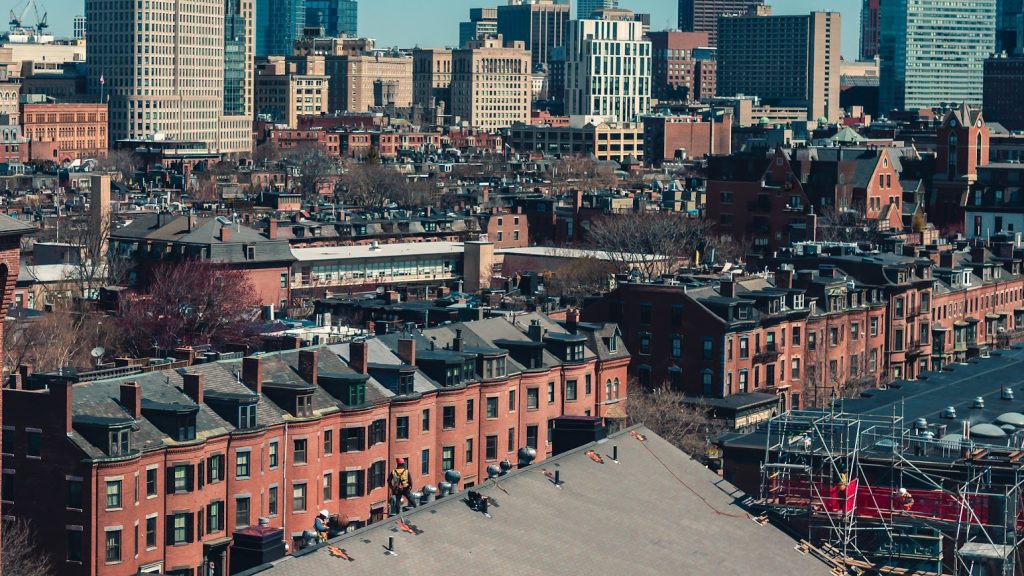
Shingle-in-Kind Replacement: We remove the damaged asphalt shingles and replace them with matching shingles, nailed to the manufacturer’s specification and hand-sealed. This is the standard patch for wind, impact, and vent-area damage on pitched roofs.
Decking Section Replacement: When the sheathing under damaged shingles is soft or delaminated, we cut out the affected section. We install new plywood, or matching boards on older homes with plank decking, then rebuild the underlayment and shingles over it.
EPDM and TPO Membrane Patches: These cover rubber and thermoplastic roofs on commercial buildings, porches, and triple-decker rear roofs. We clean and prime the membrane and apply a matching patch that extends well past the damage. EPDM patches are adhered, and TPO patches are heat-welded. Larger problems fall under our flat roof repair service.
Modified Bitumen Patches: We cut out cracked or blistered modified bitumen and patch it with new cap sheet. The patch is torched or cold-applied with lapped seams that hold through freeze-thaw cycles.
Flashing-Adjacent Patches: This method covers damage next to chimneys, skylights, sidewalls, and vent pipes. We reset or replace the step flashing or counterflashing along with the patch. That way, the new shingles tie into a watertight detail rather than butting against a failing one.
A well-done patch needs no special care, but the roof around it still benefits from routine attention:
Most importantly, have the roof checked regularly. An annual roof inspection catches small damage while it’s still patchable and tells you how much life the roof has left, so you can plan repairs instead of reacting to them.
RB Farina Roofing Co has more than 10 years of experience repairing roofs across Massachusetts. Our work ranges from Victorians in Somerville and Cambridge to commercial flat roofs in Waltham and Brockton. We patch roofs the way they’re meant to be patched: damaged material out, decking checked, and new material properly nailed, lapped, and sealed. We never cover damage with tar and hope for the best.
We’ll also tell you when a patch isn’t the right call, even if that means a smaller job for us today. Our work is backed by a workmanship warranty. You can see what homeowners and property managers say about working with us in our customer reviews.
Most shingle patches in Massachusetts typically run from about $300 to $1,200. The price depends on the size of the area, roof pitch, access, and whether decking needs replacing. Flat-roof membrane patches usually fall in a similar range. Our roof repair cost guide explains what drives pricing.
A properly done shingle-in-kind patch should last as long as the surrounding roof. That means the damaged material is removed and new shingles are nailed, lapped, and sealed into the existing courses. Tar-only or sealant-only patches often fail within a winter or two, because freeze-thaw cycles break their bond.
Usually we can get very close. We identify the shingle’s brand and line. If it’s discontinued, we source the nearest match in size, profile, and color blend. New shingles look slightly fresher at first and weather toward the surrounding roof over time. We’ll set honest expectations about the match before work starts.
Patch when the damage is confined, the decking is sound, and the roof has meaningful life left. Consider replacement when granule loss is widespread, decking is soft in several areas, leaks keep appearing in different spots, or the roof is near the end of its service life. We’ll give you an honest assessment.
Yes. We patch shingle and membrane roofs in cold weather. Shingles installed in winter need hand-sealing, because their adhesive strips won’t activate until temperatures rise. If ice or snow makes a permanent patch impossible that day, we secure the area temporarily and return to complete the repair when conditions allow.
Most failed patches were tar or sealant spread over damage instead of replacing it, and freeze-thaw cycles cracked the bond. Others failed for different reasons: soft decking or torn underlayment was left underneath, the new shingles weren’t properly nailed or lapped, or the surrounding roof was already too worn to hold a repair.
Insurance often covers patching when the damage comes from a sudden covered event, such as wind, hail, or a fallen tree. It generally doesn’t cover wear from age or lack of maintenance. We photograph the damage, the underlying repair, and the finished patch, which gives you clear documentation to support a claim.
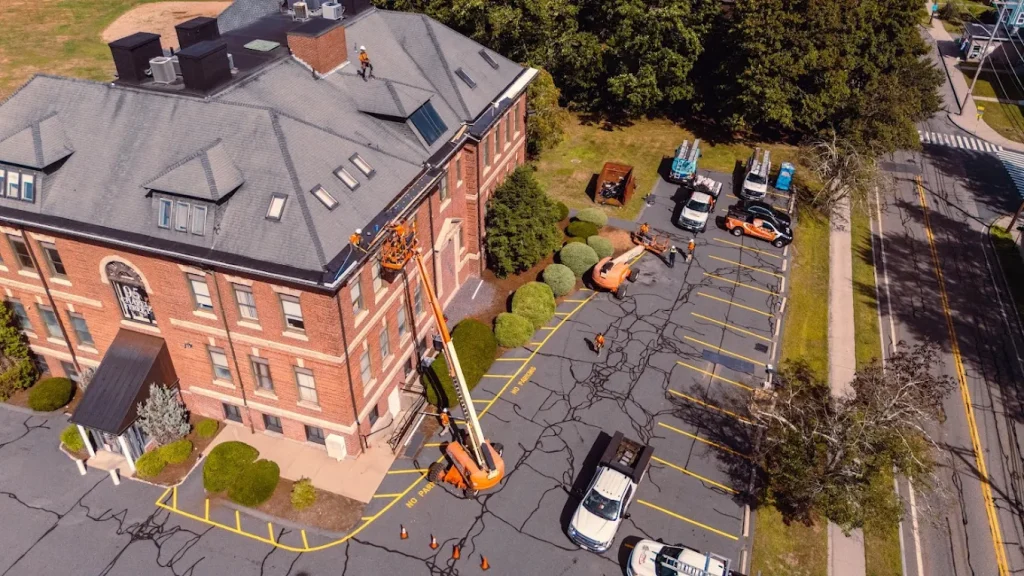
Have you spotted missing shingles, a torn membrane, or an old tar patch that’s starting to crack? RB Farina Roofing Co can inspect the area, confirm whether a patch is the right repair, and give you a clear written estimate. If the roof needs more than a patch, we’ll tell you honestly. We provide Roof Patching in Massachusetts for homes and commercial properties statewide from our base in Arlington.
Call us at (781) 648-5446 or request your free roof patching inspection online. We’ll get the damage fixed properly before the next storm reaches it.
Provide your name, phone number, and any specific service requirements.
